Managing employees, maintaining HR records, tracking attendance and monitoring important document expiry dates can become challenging as a business grows. When these tasks rely on spreadsheets, paper files and manual reminders, HR teams may spend more time on administration and less time supporting employees.
HR and document management software helps businesses organize employee information, simplify everyday HR activities and keep important records accessible through a centralized digital system.
For modern businesses looking to improve workforce management, a structured HR management solution can help reduce repetitive administrative work, improve visibility and support more efficient operations.
What Is HR and Document Management Software?
HR and document management software is a digital solution that helps businesses manage employee information, HR documents and essential workforce processes in an organised way.
Depending on the software’s available features, businesses can use it to manage employee records, track attendance and leave, support recruitment, monitor document expiry dates and generate HR reports.
Instead of maintaining separate spreadsheets and physical files, teams can manage key HR activities through a centralised platform.
For businesses handling employee passports, identification documents, employment records, driving licences and other time-sensitive documents, expiry tracking can also help HR teams plan renewals in advance.
Why Do Businesses Need HR Management Software?
Manual HR processes may work for a small team initially. However, as employee numbers increase, maintaining accurate records and tracking important dates can become more complicated.
Here are some common challenges that HR management software can help address.
1. Managing Employee Records Efficiently
Employee information is essential for everyday business operations. HR teams need to maintain accurate records, update personal details and organise employment documents.
A digital employee management system helps centralise these records, making it easier for authorised users to find and update information when required.
2. Preventing Missed Document Expiry Dates
Missing an important document renewal date can create unnecessary administrative pressure and potential compliance concerns.
Document expiry alerts help HR teams identify upcoming renewals and take action before a document expires. Depending on the software configuration, reminders may be available for selected document types and expiry periods.
This feature is particularly useful for organisations that manage multiple employees and several types of identification or employment-related documents.
3. Simplifying Attendance and Leave Management
Recording attendance manually can lead to errors, duplicate entries and time-consuming calculations.
HR software can help businesses record employee attendance, organise leave requests and review attendance information more efficiently. Supported features may also include shift management and attendance reporting.
As a result, HR teams can spend less time maintaining separate records and more time coordinating workforce activities.
4. Improving Recruitment and Onboarding
Recruitment involves several activities, including reviewing candidates, coordinating interviews and collecting information from new employees.
Recruitment and onboarding features help organise these activities in a structured workflow. Businesses can maintain candidate information, monitor recruitment stages and coordinate employee onboarding, depending on the available modules.
A consistent process can also help HR teams manage new employee information more effectively.
5. Supporting Performance and Appraisals
Employee performance reviews help organisations evaluate progress, identify development opportunities and plan training.
Performance management features can support the organisation of appraisal information and performance reports. A structured digital process makes it easier for managers and HR teams to review relevant information when planning employee development.
6. Making HR Reporting More Organised
HR reports help businesses understand workforce information and review administrative activities.
A centralised HR system can make it easier to access available reports related to employee records, attendance, leave, recruitment and other supported functions.
Accurate, well-organised information helps management make more informed operational decisions.
Key Features to Look for in HR and Document Management Software
Before choosing a solution, businesses should consider the HR processes they want to simplify.
Important features may include:
- Employee Management: Maintain employee information and related records in an organised system.
- Document Expiry Alerts: Monitor important expiry dates and plan renewals in advance.
- Attendance and Leave Management: Organise attendance records, leave requests and related reports.
- Recruitment and Onboarding: Structure recruitment activities and new employee processes.
- Performance and Appraisals: Maintain performance review information and support employee development.
- Compliance and Reporting: Organise relevant HR records and generate reports to support internal reviews.
The exact functionality available will depend on the selected software, configuration and subscription.
How HRMSuites Helps Simplify HR Operations
Businesses looking for a more organised approach to employee administration can explore HRMSuites, a dedicated HR and document management platform.
HRMSuites is presented as a solution for managing essential HR activities through a digital interface, helping businesses bring important workforce processes together.
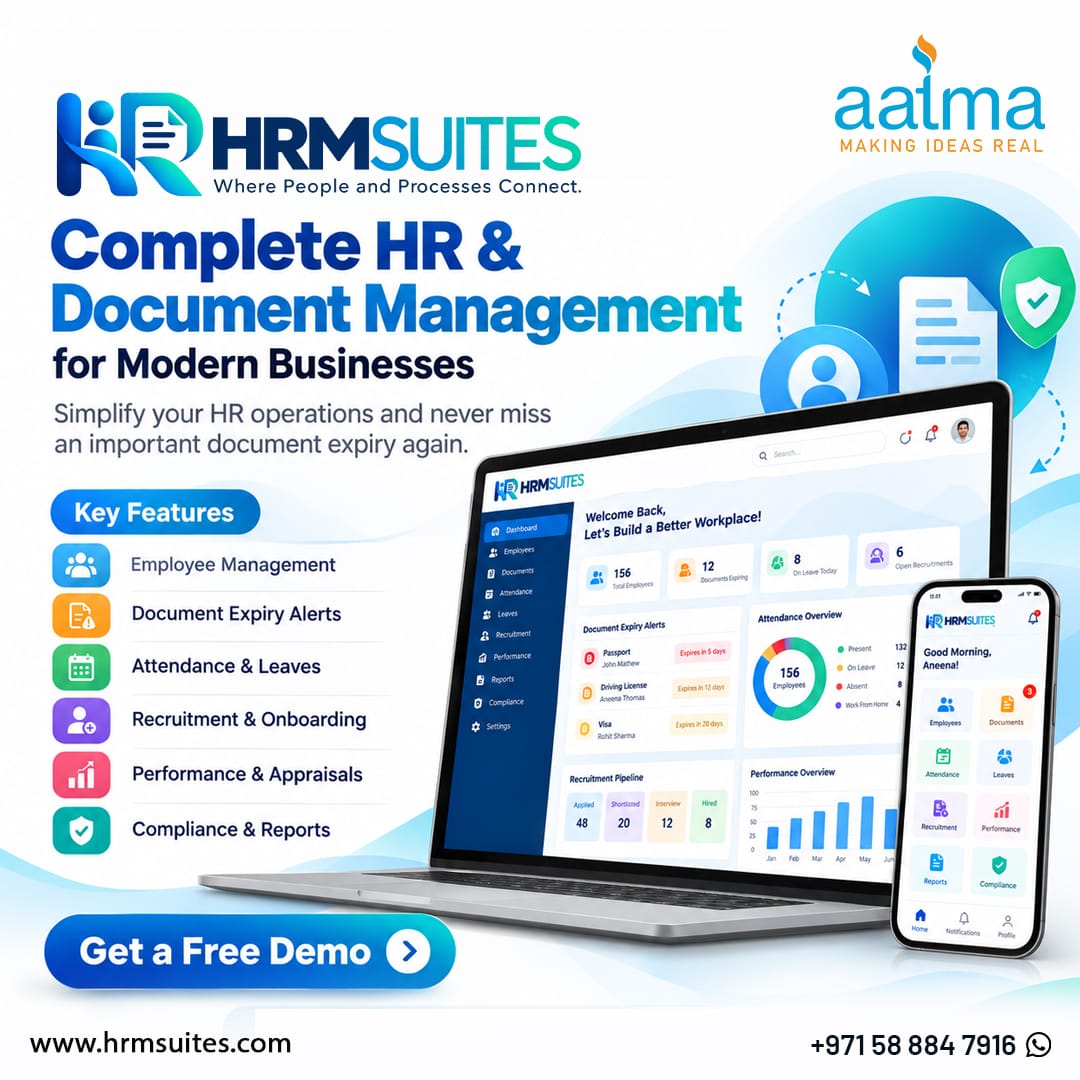
Its featured capabilities include employee management, document expiry alerts, attendance and leave management, recruitment and onboarding, performance and appraisals, and compliance reporting.
The platform is designed to provide a convenient way to access HR functions through a computer or compatible mobile interface, as illustrated in its product overview.
Businesses can learn more about its available features and suitability for their requirements by visiting the official website:
Explore HRMSuites: https://hrmsuites.com/
Before implementation, businesses should confirm the specific features, notification settings, access controls and reporting options available for their needs.
Benefits of Using HR Software for Growing Businesses
Implementing a suitable HR management solution can offer several operational benefits.
Reduced Manual Administration
Digitising repetitive HR activities can reduce dependence on spreadsheets and paper-based records.
Better Document Visibility
Organised document records and expiry reminders can help HR teams identify important renewal dates more easily.
Improved Workforce Coordination
Centralised attendance, leave and employee information can make everyday HR coordination more straightforward.
More Consistent Processes
Structured workflows help teams follow consistent procedures when managing employee records, recruitment and performance reviews.
Easier Access to HR Information
Depending on user permissions and system configuration, authorised employees and managers can access relevant information without relying on multiple disconnected files.
The overall benefit depends on how well the software fits the organisation’s processes and how consistently employees use it.
How to Choose the Right HR and Document Management Software
Selecting HR software requires more than comparing feature lists. Businesses should evaluate their current processes and future requirements before making a decision.
Consider the following questions:
- Can the software manage the employee information and documents your business needs?
- Does it support the attendance, leave and recruitment workflows you currently use?
- Can you configure document expiry reminders for relevant document types?
- Does it provide the reports required by HR teams and management?
- Are access permissions available to help protect confidential employee information?
- Is the interface suitable for your team, and is implementation support available?
- Can the platform accommodate your organisation’s expected growth?
Reviewing these points and requesting a product demonstration can help businesses determine whether a solution is suitable for their operational requirements.
Conclusion
Efficient HR management is essential for businesses that want to maintain organised employee records, improve workforce coordination and keep track of important documents.
HR and document management software offers a practical way to bring key HR activities into a more structured digital workflow. Features such as employee management, document expiry alerts, attendance and leave tracking, recruitment and reporting can help reduce repetitive administration and improve visibility.
Businesses exploring digital HR solutions can visit HRMSuites to learn more about the platform and assess its available features.
Frequently Asked Questions (FAQs)
1. What is HR and document management software?
HR and document management software is a digital platform that helps businesses organise employee records, manage HR activities and maintain important documents. Depending on its features, it may also support attendance, leave, recruitment, performance reviews and document expiry tracking.
2. How does HR software help prevent document expiry?
HR software with document expiry alerts helps HR teams monitor selected document dates and receive reminders when renewals are approaching. The available reminder settings and supported document types depend on the software configuration.
3. Can HR software manage employee attendance and leave?
Yes. Many HR management platforms include attendance and leave management features. Depending on the system, employees may be able to submit leave requests while authorised managers review requests and attendance records.
4. Is HR and document management software suitable for small businesses?
Yes. Small businesses can benefit from organised employee records, digital document management and structured HR processes. The most suitable solution depends on the business’s employee count, operational requirements and budget.
5. What features should businesses look for in HR management software?
Businesses should evaluate employee management, document expiry alerts, attendance and leave tracking, recruitment, onboarding, performance management, reporting and access controls. The final selection should reflect the organisation’s actual HR requirements.
6. Can HR software help with compliance management?
HR software can help organise relevant records, track important dates and generate reports that support internal compliance processes. However, using software does not automatically guarantee legal compliance; businesses must still follow applicable laws and maintain accurate records.
7. Where can I learn more about HRMSuites?
Visit the official HRMSuites website to explore the product, review its available features and enquire about a demonstration.